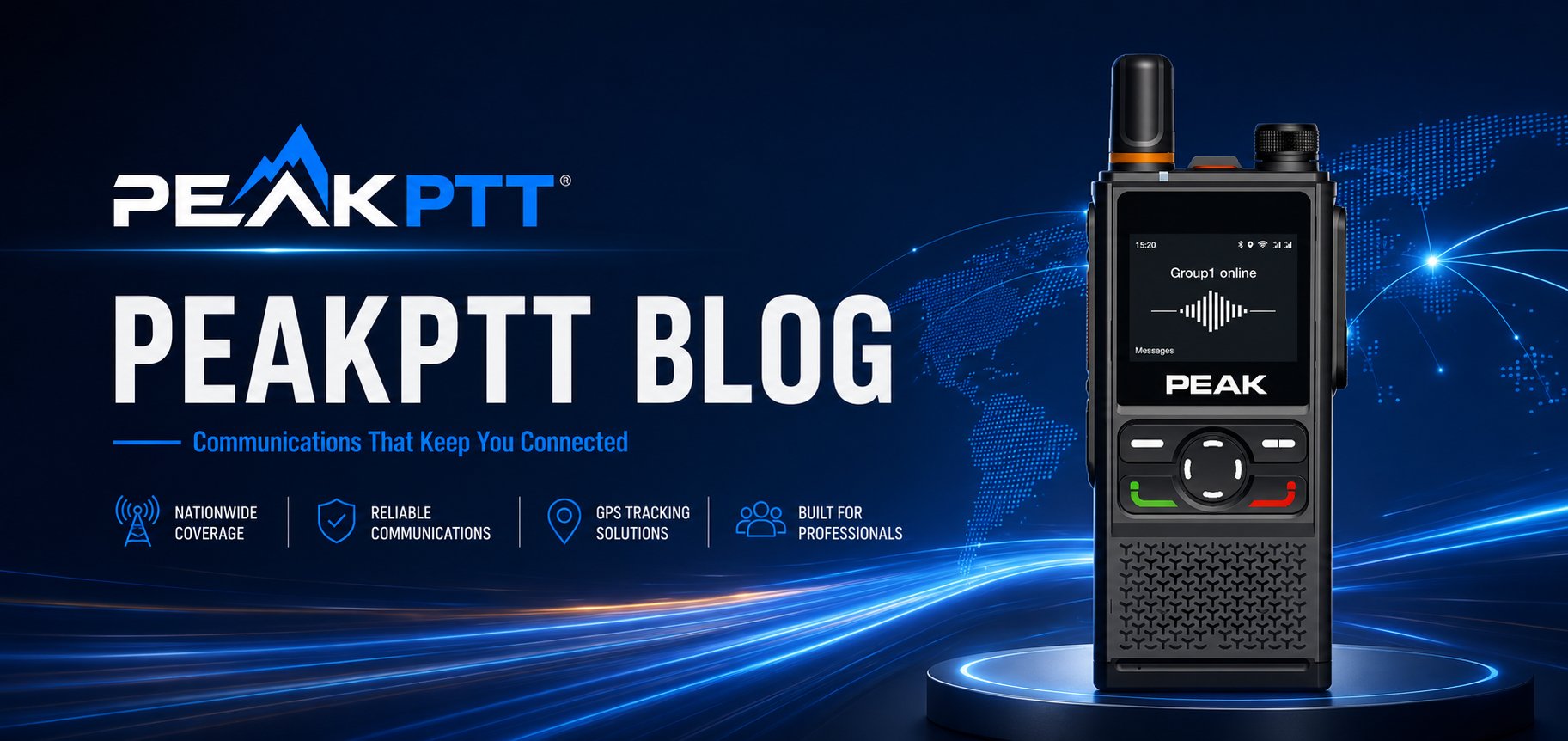
For businesses seeking efficient and compliant communication, understanding how to utilize two-way radios without FCC license complexities is crucial. Traditional Land Mobile Radio (LMR) systems often come with a labyrinth of regulatory hurdles, including licensing fees, frequency coordination, and ongoing administrative tasks. However, modern push-to-talk over cellular (PoC) technology offers a powerful and streamlined alternative, providing instant, nationwide communication for commercial teams without requiring businesses to navigate direct FCC licensing.
Key Takeaways
- Traditional two-way radios typically require FCC licenses, incurring costs and administrative burdens for businesses.
- Push-to-Talk over Cellular (PoC) radios bypass direct FCC licensing for end-users by utilizing existing cellular and Wi-Fi networks.
- PoC offers nationwide coverage, instant group communication, and advanced features like GPS tracking, far exceeding LMR range.
- PeakPTT provides rugged PoC devices with predictable, affordable monthly service, eliminating infrastructure costs and long-term commitments.
- Transitioning to PoC simplifies deployment, reduces operational overhead, and ensures regulatory compliance for business communication.
Understanding FCC Licensing for Traditional Two-Way Radios
The Federal Communications Commission (FCC) is an independent U.S. government agency responsible for regulating interstate and international communications by radio, television, wire, satellite, and cable. For decades, businesses relying on traditional two-way radio systems, often referred to as Land Mobile Radio (LMR), have operated under strict FCC guidelines. These guidelines ensure that radio frequencies are used efficiently and without interference, which is vital for maintaining clear communication channels.
Traditional LMR systems typically operate on specific frequency bands designated for business use, such as VHF (Very High Frequency) and UHF (Ultra High Frequency). To use these bands, businesses must obtain an FCC license. This licensing process involves applying for specific frequencies, often requiring coordination with a certified frequency coordinator to ensure exclusivity and prevent interference with other users in the same geographic area. The complexity varies depending on the power output of the radios, the number of units, and the desired coverage area.
The Regulatory Landscape for Business Communication
For many businesses, navigating this regulatory landscape can be a significant undertaking. The FCC issues different types of licenses, each with its own set of rules and requirements. For example, some licenses are for itinerant operations, while others are for fixed base stations and mobile units within a defined service area. This means that a construction company operating across multiple states or a logistics firm with a nationwide fleet would need to consider the geographical scope of their licenses carefully, potentially requiring multiple authorizations.
Beyond the initial application, businesses must also adhere to ongoing compliance. This includes ensuring their radio equipment meets technical standards, operating within assigned frequencies, and renewing licenses, which typically occurs every 10 years. Failure to comply can result in substantial fines and operational disruption, making FCC licensing a critical but often burdensome aspect of traditional business communication.
The Costs and Complexities of Radio Licensing for Businesses
Obtaining and maintaining an FCC license for traditional two-way radios is not merely a formality; it involves tangible costs and significant administrative effort. These expenses can quickly add up, impacting a business’s communication budget and operational efficiency. The initial application fee for an FCC license can range from hundreds to thousands of dollars, depending on the complexity and type of license required. For businesses needing multiple frequencies or operating across various regions, these fees multiply.
Beyond the FCC’s direct fees, businesses often incur additional costs for frequency coordination. A certified frequency coordinator helps identify available frequencies in a specific area, minimizing interference and ensuring optimal performance. These services come with their own charges, adding another layer of expense to the licensing process. Furthermore, the technical expertise required to complete the application correctly and manage the associated paperwork often necessitates hiring consultants or dedicating internal resources, diverting time and money away from core business activities.
Administrative Burden and Operational Delays
The administrative burden associated with FCC licensing extends beyond initial setup. Businesses must track renewal dates, which are typically every 10 years, and ensure all information remains current. Any changes to the radio system, such as adding new frequencies, increasing power, or expanding the service area, may require amendments to existing licenses or new applications entirely. This constant oversight demands dedicated administrative attention, which can be particularly challenging for small to mid-sized businesses with limited staff.
Perhaps most critically, the licensing process introduces significant operational delays. From initial application submission to final approval, obtaining an FCC license can take several weeks or even months. For businesses that need to deploy communication solutions quickly to meet project deadlines or respond to immediate operational needs, these delays can be detrimental. The necessity of waiting for regulatory approval before deploying vital communication tools directly impacts efficiency, responsiveness, and ultimately, profitability.
How Push-to-Talk Over Cellular (PoC) Avoids FCC Requirements
The advent of Push-to-Talk over Cellular (PoC) technology has revolutionized business communication by offering a powerful alternative that sidesteps the traditional FCC licensing requirements for end-users. PoC operates fundamentally differently from LMR systems, leveraging existing nationwide cellular networks (4G LTE and increasingly 5G) and Wi-Fi infrastructure. This distinction is key to its regulatory simplicity.
PoC devices, like those offered by PeakPTT, function much like smartphones or other cellular devices. When you transmit a message, it travels as data over the cellular carrier’s network or a local Wi-Fi connection. The cellular carriers themselves hold the necessary FCC licenses for operating their vast network infrastructure. Therefore, individual businesses using PoC radios do not need to obtain their own specific FCC licenses. This means no application fees, no frequency coordination, and no renewal paperwork for the business itself.
Push-to-Talk over Cellular (PoC) is a communication technology that allows users to have instant, one-to-many or one-to-one voice communication over cellular data networks or Wi-Fi, mimicking the functionality of traditional two-way radios but with significantly expanded range and features. By utilizing established cellular infrastructure, PoC eliminates the need for businesses to invest in and maintain their own radio towers, repeaters, or licensed frequencies. This plug-and-play model dramatically simplifies deployment and reduces the total cost of ownership for business communication systems.
Beyond Licensing: Key Benefits of PoC for Business Communication
While avoiding FCC licensing is a significant advantage, the benefits of PoC extend far beyond regulatory simplicity. These modern communication solutions offer a host of operational improvements that directly impact efficiency, safety, and scalability for commercial teams across various industries.
- Nationwide Coverage: Unlike traditional LMR radios, which are limited by line-of-sight and repeater infrastructure, PoC devices operate wherever there’s cellular or Wi-Fi coverage. This means seamless communication across jobsites, warehouses, field operations, and even distributed teams across the entire United States, covering over 90% of the U.S. landmass with 4G LTE.
- Instant Communication: PoC radios deliver sub-second message delivery, ensuring that critical information reaches teams instantly. This rapid response capability is vital for coordination in fast-paced environments like construction sites, logistics, and emergency services.
- Scalability: PoC systems are inherently scalable. Adding new users or expanding communication groups is as simple as activating a new device or adjusting software settings, without the need for additional infrastructure or complex frequency planning. This makes it ideal for businesses experiencing growth or fluctuating team sizes.
- Advanced Features: Modern PoC solutions offer more than just voice. Features like GPS tracking provide real-time workforce visibility, allowing managers to monitor team locations, optimize routes, and enhance safety. Other capabilities often include group calling, private calls, emergency alerts, and even dispatch software integration.
- Cost Predictability: With PoC, businesses typically pay a predictable monthly service fee per device, similar to a cell phone plan. This eliminates the upfront capital expenditure for repeaters, towers, and extensive maintenance associated with LMR, offering clear budgetary control.
- Rugged Hardware: PeakPTT’s PoC devices are built for demanding environments. They are rugged, IP67-rated for dust and water resistance, and designed to withstand drops and harsh conditions common in industrial and field settings. This ensures reliable performance where traditional consumer-grade devices would fail.
The transition to PoC represents a strategic move for businesses looking to modernize their communication infrastructure. It provides a robust, future-proof solution that enhances operational capabilities while minimizing administrative headaches and capital investment.
PeakPTT: Your Simplified, License-Free Communication Solution
PeakPTT stands at the forefront of providing businesses with reliable, scalable, and hassle-free push-to-talk over cellular communication. Our solutions are specifically designed to address the challenges faced by operations managers, warehouse supervisors, construction foremen, and field service coordinators who need instant, dependable communication without the complexities and costs of traditional two-way radio systems.
We understand that your primary goal is to keep your teams connected and productive. That’s why PeakPTT offers a comprehensive package that includes rugged, purpose-built hardware, affordable monthly service, and unparalleled customer support. Our devices operate seamlessly across nationwide 4G LTE and Wi-Fi networks, ensuring your teams are always within reach, whether they are on a remote job site, in a sprawling warehouse, or coordinating logistics across state lines. The range limitations that plague conventional two-way radios are simply not a factor with PeakPTT.
One of PeakPTT’s core differentiators is our low-friction buying model. We offer a one-time device purchase, followed by affordable recurring service with no long-term commitment. This flexible approach, coupled with same-business-day shipping, means you can deploy your communication system quickly and without significant upfront capital investment. We stand by the quality of our products with a 45-day risk-free guarantee and a lifetime hardware warranty tied to active service, providing peace of mind and demonstrating our commitment to your operational success.
Choosing PeakPTT means opting for a modern walkie-talkie system that delivers instant performance, nationwide reach, and real customer support, positioning us as a trusted communications partner. Our direct-to-customer ecommerce model, backed by consultative sales and ongoing support, makes acquiring and managing your communication system straightforward and efficient. For more insights into optimizing your team’s connectivity, visit our blog.
Frequently Asked Questions
Are there any limitations to using PoC radios without an FCC license?
While PoC radios do not require an FCC license for the end-user, their operation relies on existing cellular network coverage. This means communication is dependent on the availability and strength of 4G LTE or Wi-Fi signals in your operational areas. For most urban and suburban environments, coverage is extensive, but remote or extremely isolated locations might still pose challenges. However, this is significantly broader than the typical range of unlicensed LMR radios.
How does PoC compare to license-free FRS/GMRS radios?
FRS (Family Radio Service) and GMRS (General Mobile Radio Service) radios are indeed license-free or easily licensed for personal use, but they come with significant limitations for business applications. FRS radios have very low power output (typically 2 watts or less) and limited range, often only a mile or two in ideal conditions. GMRS offers slightly more power and range but still pales in comparison to the nationwide reach of PoC. PoC radios also offer advanced features like group calling, GPS tracking, and dispatch capabilities that are absent in FRS/GMRS.
Is cellular network coverage reliable enough for business-critical communication?
Modern cellular networks, particularly 4G LTE, offer robust and reliable coverage across the vast majority of the United States, designed for critical voice and data transmission. PeakPTT PoC devices leverage these established networks, providing highly dependable communication. Additionally, many PoC devices can seamlessly switch to Wi-Fi when available, further enhancing reliability in areas with strong Wi-Fi signals, such as within buildings or warehouses, ensuring continuous connectivity for business-critical operations.
Ready to streamline your team’s communication with a reliable, license-free solution? Explore PeakPTT’s range of rugged push-to-talk over cellular radios and discover how instant, nationwide connectivity can transform your operations. Visit our website or contact our sales team today to learn more and take advantage of our 45-day risk-free guarantee.