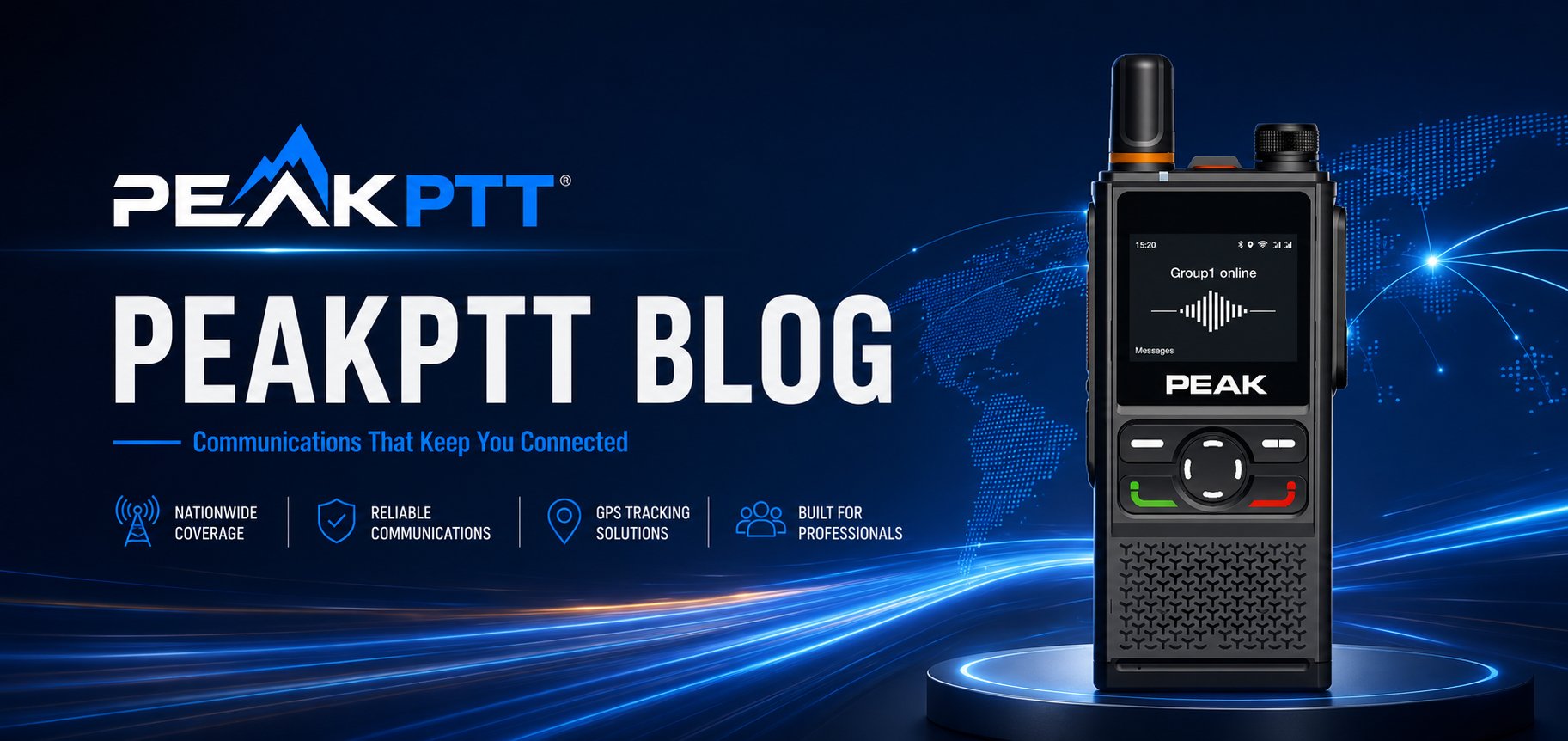

Push-to-talk phones offer instant communication capabilities, typically referring to either smartphones utilizing a PTT application or dedicated push-to-talk over cellular (PoC) devices designed specifically for rugged business environments. Identifying the right solution for your team hinges on understanding the distinct advantages and limitations of each type in operational settings.
Key Takeaways
- Push-to-talk phones encompass both smartphone apps and purpose-built PoC radios.
- Smartphones with PTT apps suit managers and office staff who need occasional team communication.
- Dedicated PoC radios are superior for frontline workers due to ruggedness, battery life, and ease of use.
- PeakPTT offers robust PoC radios with nationwide 4G LTE coverage, designed for tough industrial conditions.
- A hybrid approach, radios for field crews, apps for support staff, often provides the most efficient and cost-effective communication strategy.
- PeakPTT solutions eliminate complex infrastructure, offering predictable monthly costs and immediate deployment.
What Are Push-to-Talk Phones? Understanding the Landscape
The term “push-to-talk phones” can be a bit broad, encompassing two primary categories of devices that deliver instant, one-to-many communication. Both leverage modern cellular networks to overcome the range limitations of traditional two-way radios, but they cater to different operational needs and user experiences. Understanding this distinction is crucial for businesses evaluating their communication tools.
Smartphones with Push-to-Talk Applications
One common interpretation of push-to-talk phones involves standard smartphones running a specialized PTT application. These apps transform a regular mobile phone into a walkie-talkie, allowing users to communicate with individuals or groups by pressing a virtual button on the screen. This approach offers convenience for users who already carry a smartphone, making it a flexible option for certain roles within an organization.
For roles like office managers, supervisors who split time between a desk and the field, or administrative staff, a smartphone PTT app can be highly effective. It allows them to stay connected with field teams without needing an additional device. However, this convenience comes with inherent limitations when deployed in demanding, hands-on environments.
Dedicated Push-to-Talk Over Cellular (PoC) Devices
The second, and often more robust, interpretation refers to dedicated push-to-talk over cellular (PoC) devices. These are purpose-built radios that look and feel like traditional two-way radios but operate on nationwide 4G LTE and Wi-Fi networks. They are designed from the ground up for professional use, prioritizing durability, ease of use, and specialized features essential for frontline workers.
Push-to-talk over cellular (PoC) refers to a technology that enables instant, two-way voice communication over cellular data networks, mimicking the functionality of traditional two-way radios but with vastly expanded coverage and capabilities. These dedicated devices typically feature a prominent physical PTT button, ruggedized construction, powerful audio output, and extended battery life, making them ideal for demanding operational environments.
The Limitations of Smartphones for Frontline Work
While smartphone PTT apps offer undeniable convenience, relying solely on them for frontline communication can introduce significant inefficiencies and risks. Modern smartphones are designed for a wide range of personal and professional tasks, but they are not optimized for the specific rigors of industrial, construction, logistics, or field service environments. This often leads to compromised performance when instant, reliable, and durable communication is paramount.
One major drawback is durability. Consumer-grade smartphones are generally not built to withstand drops onto concrete, exposure to dust, dirt, moisture, or extreme temperatures, conditions commonly found on jobsites or in warehouses. A cracked screen or water damage can quickly render a device useless, leading to communication breakdowns and costly replacements. This fragility means workers often spend time protecting their devices rather than focusing on their tasks.
Battery life is another critical concern. Smartphones are power-hungry, running numerous apps and background processes. A typical smartphone battery may struggle to last a full 8-12 hour shift with continuous PTT usage, GPS tracking, and other applications. Frontline workers need devices that reliably last their entire shift, ensuring uninterrupted communication without the need for frequent recharging or carrying backup power banks.
Furthermore, the user experience of a smartphone is not ideal for rapid, hands-free communication. Locating and pressing a virtual PTT button on a touchscreen, especially while wearing gloves or in fast-paced situations, is cumbersome and slow. The need to unlock the screen, navigate to an app, and then press a button adds critical seconds to response times, which can be detrimental in safety-critical or time-sensitive scenarios. Screen glare in bright sunlight or low visibility conditions can also make operation difficult.
Finally, audio quality from standard smartphone speakers often falls short in noisy environments. On a busy construction site, in a bustling warehouse, or amidst heavy machinery, the relatively small speakers of a smartphone struggle to deliver clear, audible communication. This forces workers to repeatedly ask for clarification, move to quieter areas, or miss critical instructions altogether, impacting efficiency and safety.
Why Dedicated Push-to-Talk Radios Excel in the Field
For operations-driven businesses, dedicated push-to-talk radios offer a level of performance, reliability, and user experience that smartphones simply cannot match in demanding environments. These devices are engineered with the specific challenges of frontline work in mind, providing robust communication tools that enhance safety, efficiency, and coordination.
A dedicated push-to-talk radio is a purpose-built device designed for instant group communication, featuring rugged construction, a physical PTT button, powerful audio, and extended battery life, operating over cellular networks for nationwide coverage.
Ruggedness and Durability for Any Environment
The primary advantage of dedicated PoC radios is their unparalleled ruggedness. Devices like those offered by PeakPTT are built to industrial standards, designed to withstand the harsh realities of jobsites, warehouses, and field operations. They are typically IP-rated for water and dust resistance, and engineered to survive multiple drops onto concrete. This means less downtime due to damaged equipment and a lower total cost of ownership compared to repeatedly replacing fragile smartphones.
For example, PeakPTT radios are engineered to endure daily abuse, ensuring that your communication lifeline remains intact regardless of the environment. This inherent toughness provides peace of mind for operations managers who cannot afford communication failures due to device fragility.
Instant Communication and Superior Audio Clarity
Dedicated PoC radios feature a large, tactile push-to-talk button that is easy to locate and activate, even when wearing gloves or in low-light conditions. This physical button ensures sub-second message delivery, crucial for immediate coordination and rapid response. There’s no need to unlock a screen or navigate menus, just press and talk.
Audio clarity is another significant differentiator. Many dedicated PoC radios, such as the PeakPTT PTT-324G, come equipped with powerful 3-watt speakers. These high-output speakers are designed to cut through background noise from machinery, traffic, or crowded environments, ensuring that every message is heard clearly the first time. This significantly reduces miscommunications and improves operational efficiency, particularly in safety-critical situations.
Extended Battery Life and Ergonomic Design
Battery life is paramount for frontline workers. Dedicated PoC radios are optimized for power efficiency, often providing extended battery life that can last for multiple shifts on a single charge. For instance, the PeakPTT PTT-284G offers up to 38 hours of standby time, ensuring your teams remain connected throughout their entire workday without interruption. This eliminates the need for mid-shift recharging or carrying bulky power banks, streamlining operations.
The ergonomic design of these radios also contributes to their superiority. They are shaped for comfortable handling, often with non-slip grips, and are designed for single-hand operation. Their form factor is familiar to anyone who has used a traditional two-way radio, minimizing the learning curve and encouraging adoption among field teams. This focus on practical usability makes them a true tool for the job, rather than a general-purpose device shoehorned into a demanding role.
PeakPTT: A Modern Solution for Business Communication
PeakPTT provides a comprehensive push-to-talk over cellular solution that directly addresses the communication challenges faced by operations-driven businesses. Our system combines rugged, purpose-built hardware with nationwide 4G LTE connectivity, delivering instant, reliable communication that outperforms both traditional two-way radios and smartphone PTT apps for frontline teams.
Our dedicated PoC radios are designed for maximum durability and ease of use. They integrate seamlessly with our affordable monthly service, which costs just $24.95 per radio per month, with a one-time activation fee of $19.95. This transparent pricing model, coupled with no long-term contracts, makes budgeting straightforward and predictable. Businesses can choose from a range of devices, with hardware costs starting from $129 for models like the PTT-284G up to $389 for advanced units like the PTT-624G.
Key features of the PeakPTT solution include:
- Nationwide Coverage: Leveraging 4G LTE networks, PeakPTT radios provide instant communication across the entire United States, eliminating range limitations. LTE (Long-Term Evolution) stands for a standard for wireless broadband communication for mobile devices and data terminals, offering high-speed data transmission that is ideal for push-to-talk over cellular applications.
- Instant Team Communication: With sub-second call setup, teams can connect instantly, enhancing coordination and response times. Talk groups can support up to 2,000 users and can be changed over the air for free, offering unparalleled scalability.
- GPS Tracking and Workforce Visibility: All PeakPTT radios include GPS tracking, updating positions every 60 seconds and storing 90 days of history. This provides real-time visibility into team locations, improving safety and logistical efficiency. Our PC dispatch console, available for $12 per seat per month, offers live GPS maps and recorded call playback for comprehensive oversight.
- Hybrid Communication: For managers or office staff who prefer to use their existing smartphones, our mobile app allows them to join the same talk groups as the radio fleet for just $9.95/month. This hybrid approach ensures everyone stays connected, regardless of their primary device.
- Unmatched Customer Assurance: PeakPTT stands behind its products with 24/7 US-based human support, a 45-day risk-free guarantee, and a lifetime hardware warranty tied to active service. We are committed to being a trusted communications partner. For more insights into how modern communication can transform your operations, visit our blog at blog.peakptt.com.
By choosing PeakPTT, businesses eliminate the need for expensive repeater towers, complex FCC licensing, and ongoing infrastructure maintenance. Our plug-and-play deployment means your teams can be up and running quickly, experiencing reliable, scalable voice communication from day one.
Frequently Asked Questions
What’s the main difference between a PTT phone app and a dedicated radio?
The main difference lies in purpose and design. A PTT phone app runs on a consumer smartphone, offering convenience but lacking ruggedness, dedicated physical buttons, powerful audio, and extended battery life. A dedicated PTT radio is purpose-built for harsh environments, featuring a physical PTT button, industrial-grade durability, superior audio output, and long-lasting batteries, making it ideal for frontline workers.
Do push-to-talk phones require an FCC license?
No, push-to-talk over cellular (PoC) phones, whether they are smartphones running an app or dedicated PoC radios, do not require an FCC license for end-users. This is because they operate over commercial cellular networks (like 4G LTE), and the carriers themselves hold the necessary spectrum licenses. This simplifies deployment and reduces regulatory burdens for businesses.
Can I track my team’s location with PTT phones?
Yes, most dedicated push-to-talk over cellular (PoC) systems, including PeakPTT, integrate GPS tracking capabilities. This allows operations managers to view the real-time location of their team members, monitor routes, and access historical location data. This feature significantly enhances workforce visibility, improves safety protocols, and optimizes logistical coordination.
Ready to upgrade your team’s communication with reliable, nationwide push-to-talk radios? Explore PeakPTT’s rugged devices and flexible service plans today to find the perfect solution for your business operations.