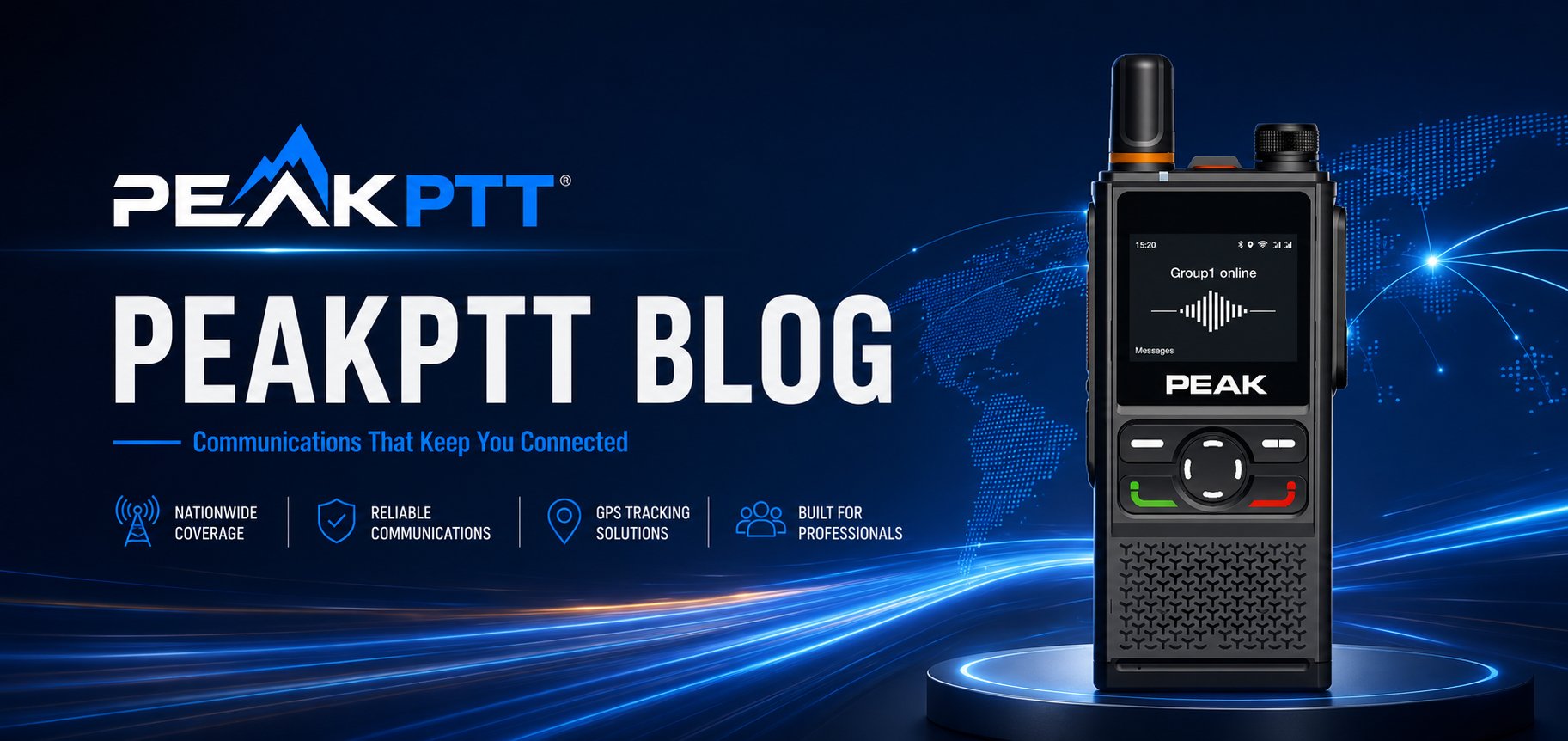
Push-to-Talk Over Cellular: Modernizing Business Communication Beyond Traditional Two-Way Radios

Discover how Push-to-Talk Over Cellular (PoC) radios are revolutionizing business communication. Learn why PoC offers superior range, affordability, and features compared to traditional two-way radios for modern teams.

In today’s fast-paced business environment, effective communication is the bedrock of efficiency, safety, and operational success. For frontline teams operating across diverse locations—from bustling construction sites and expansive warehouses to widespread field operations—instant, reliable voice communication is not just a convenience; it’s a critical necessity. Traditionally, two-way radios have filled this role, providing direct communication at the push of a button. However, as technology evolves and business needs grow more complex, the limitations of these conventional systems are becoming increasingly apparent.

Enter Push-to-Talk Over Cellular (PoC) technology. This innovative solution is rapidly redefining what’s possible for business communication, offering a modern, scalable, and highly capable alternative to traditional two-way radios. PoC leverages the ubiquitous 4G LTE and Wi-Fi networks to deliver instant, nationwide communication, effectively eliminating the range restrictions, infrastructure costs, and regulatory complexities that have long plagued conventional radio systems. For operations managers, logistics leaders, and field service coordinators, understanding the power of PoC is key to unlocking new levels of team coordination and productivity.

This comprehensive guide will explore why Push-to-Talk Over Cellular is not just an upgrade but a fundamental shift in business communication, offering unparalleled advantages for organizations seeking dependable, efficiency-oriented solutions.

The Limitations of Traditional Two-Way Radios

For decades, two-way radios, often referred to as walkie-talkies, have been the standard for on-site team communication. They offer immediate voice contact, which is vital in many operational settings. However, their core technology, relying on radio frequency (RF) signals, comes with inherent drawbacks that limit their utility in a modern, distributed business landscape.

While traditional two-way radios certainly have their place, their constraints often create bottlenecks for growing businesses and geographically dispersed teams. The need for a more robust, flexible, and cost-effective solution has never been clearer.

Range Restrictions and Infrastructure Dependence

The most significant limitation of traditional two-way radios is their limited range. Operating on specific radio frequencies, their signal strength diminishes over distance, often restricted to a few miles or even less in built-up areas. To extend this range, businesses must invest in expensive repeater towers and complex antenna systems. This infrastructure is not only costly to purchase and install but also requires ongoing maintenance and dedicated sites.

This dependence on localized infrastructure means that communication is confined to a specific geographic area. Teams working across different jobsites, warehouses, or widespread field operations cannot communicate seamlessly without significant and costly infrastructure replication. This creates communication silos, hindering overall operational efficiency and coordination.

High Upfront Costs and Ongoing Maintenance

Beyond the initial purchase of radios, traditional two-way radio systems often demand substantial capital investment. This includes the aforementioned repeaters, antennas, and licensing fees from regulatory bodies like the FCC. These costs can quickly escalate, making it a significant barrier for small to mid-sized businesses or those looking to scale rapidly.

Furthermore, maintaining this complex infrastructure requires specialized knowledge and routine servicing. Downtime due to equipment failure can severely disrupt operations, impacting productivity and safety. The total cost of ownership for traditional systems often far exceeds the initial device purchase, encompassing hidden expenses for licenses, repairs, and infrastructure upkeep.

Lack of Advanced Features

Traditional two-way radios are primarily designed for voice communication. While effective for simple one-to-many or one-to-one calls, they typically lack the advanced features that modern businesses rely on. Data transmission, GPS tracking, group management, and emergency alerts are either non-existent or require expensive, specialized add-ons.

This absence of integrated features means businesses often have to supplement their communication with separate devices or systems, adding complexity and cost. For operations managers needing real-time visibility of their workforce or the ability to send critical data, traditional radios fall short of providing a comprehensive solution.

Introducing Push-to-Talk Over Cellular (PoC): A Modern Paradigm

Push-to-Talk Over Cellular (PoC) represents a revolutionary leap forward in business communication. By harnessing the power of existing 4G LTE and Wi-Fi networks, PoC radios transform the concept of instant voice communication, extending it far beyond the localized confines of traditional two-way radio systems.

This technology fundamentally changes how teams connect, offering a robust, scalable, and feature-rich platform that meets the demands of contemporary operations. It’s a pragmatic solution for businesses that prioritize efficiency, reach, and cost-effectiveness without compromising on reliability.

How PoC Works: Leveraging Existing Networks

Unlike traditional radios that broadcast signals over proprietary frequencies, PoC devices operate much like a smartphone, utilizing cellular data networks (4G LTE) and Wi-Fi. When a user presses the push-to-talk button, their voice is converted into data packets and transmitted over the cellular network to the intended recipients. This process is instantaneous, mimicking the familiar feel of a traditional walkie-talkie but with vastly expanded reach.

This reliance on established cellular infrastructure is a game-changer. It means businesses no longer need to build and maintain their own repeater towers or acquire expensive FCC licenses. Instead, they tap into the expansive and highly reliable networks already in place, ensuring seamless communication across cities, states, and even nationwide. When cellular service isn’t available, many PoC devices seamlessly switch to Wi-Fi, providing additional connectivity options within warehouses, offices, or other Wi-Fi enabled zones.

Key Advantages of Push-to-Talk Over Cellular for Businesses

The transition to Push-to-Talk Over Cellular offers a compelling suite of benefits for businesses across various sectors. These advantages directly address the pain points associated with traditional radio systems, providing a superior solution for modern communication needs.

  • Nationwide Coverage: The most significant benefit of PoC is its unparalleled reach. By operating on 4G LTE networks, PeakPTT PoC radios provide instant communication across an entire country, wherever there’s cellular coverage. This eliminates the range limitations of traditional radios, allowing distributed teams—whether across a large campus or multiple states—to communicate seamlessly. No more dead zones within your operational footprint due to insufficient repeater coverage.
  • Cost-Effectiveness and Predictable Spending: PoC dramatically reduces the total cost of ownership. Businesses avoid the substantial upfront capital expenditure for repeaters, antennas, and FCC licensing. Instead, they typically purchase rugged PoC devices and subscribe to an affordable monthly service plan. This predictable, recurring cost structure simplifies budgeting and eliminates unexpected maintenance expenses. PeakPTT specifically offers affordable monthly service with no long-term commitment, making it an economically sound choice.
  • Enhanced Features: GPS Tracking, Group Calls, and More: PoC radios are far more than just voice communicators. They integrate advanced features crucial for modern operations. GPS tracking provides real-time workforce visibility, allowing managers to locate team members, optimize routes, and respond effectively to emergencies. Group calling facilitates instant communication with specific teams or the entire fleet. Many devices also support private calls, emergency alerts, and even basic messaging, transforming a simple radio into a powerful operational tool.
  • Rugged Hardware for Demanding Environments: Business communication tools must withstand the rigors of industrial use. PoC radios, like those offered by PeakPTT, are specifically designed for durability. They are built to be rugged devices for jobsites, warehouses, and field operations, often featuring IP ratings for water and dust resistance, and meeting military standards for shock and vibration. This ensures reliable performance in harsh conditions where traditional consumer devices would fail.
  • Scalability and Flexibility: PoC systems are inherently scalable. Adding new users or expanding communication coverage is as simple as activating a new device on the network. There’s no need to install additional infrastructure or reconfigure existing systems. This makes PoC an ideal solution for teams ranging from small crews to large fleets, capable of growing with your business without significant operational hurdles. PeakPTT’s plug-and-play deployment model exemplifies this ease of scalability.
  • Simplified Deployment and Management: The direct-to-customer ecommerce model, combined with consultative sales and ongoing support, makes deploying PoC systems incredibly straightforward. Businesses can get their teams up and running quickly, often with same-business-day shipping and minimal setup. This low-friction buying model and ease of use are a significant draw for operations-driven organizations.

PoC in Action: Real-World Applications for Diverse Industries

The versatility and robust capabilities of Push-to-Talk Over Cellular make it an ideal communication solution across a wide spectrum of industries. Its ability to provide instant, nationwide communication with advanced features directly translates into improved efficiency, safety, and coordination for frontline teams.

For businesses seeking to improve response time, enhance coordination, bolster safety protocols, and gain better workforce visibility, PoC offers a practical and powerful solution. Its adaptability makes it a valuable asset for almost any operations-driven organization.

  • Construction and Job Sites: On sprawling construction sites, instant communication between crane operators, foremen, and ground crews is critical for safety and project timelines. PoC radios provide reliable communication across vast areas, even between multiple sites, without the need for expensive, temporary repeater setups. GPS tracking helps coordinate teams and equipment, ensuring everyone is where they need to be.
  • Logistics and Transportation: For trucking companies, delivery services, and logistics operations, nationwide coverage is paramount. PoC allows dispatchers to communicate instantly with drivers across state lines, coordinate deliveries, and respond to route changes in real time. Integrated GPS tracking offers precise vehicle location, improving fleet management and customer service.
  • Warehouse and Manufacturing: In large warehouses or manufacturing facilities, Wi-Fi connectivity allows PoC radios to operate seamlessly indoors, ensuring clear communication between forklift operators, inventory managers, and production line supervisors. This enhances safety, streamlines workflows, and reduces downtime due to communication gaps.
  • Field Services and Utilities: Technicians working remotely on utility lines, HVAC systems, or other field services need reliable communication with their base and each other. PoC radios provide this connectivity even in remote areas with cellular service, enabling quick problem-solving and emergency response. GPS capabilities aid in dispatching and ensuring lone worker safety.
  • Security and Event Management: Security teams and event staff require discreet, instant, and reliable communication to manage crowds, coordinate responses, and ensure public safety. PoC offers private talk groups, emergency features, and the ability to cover large venues or widespread patrol areas effectively, without the clutter of multiple devices.

Why Choose PeakPTT for Your PoC Solution?

While the advantages of Push-to-Talk Over Cellular are clear, the choice of provider is equally critical. PeakPTT stands apart as a trusted communications partner, offering a comprehensive solution that combines cutting-edge technology with an unwavering commitment to customer success and operational dependability.

We understand the unique demands of frontline operations and have meticulously crafted our offering to meet those needs head-on. Choosing PeakPTT means investing in a communication system designed for toughness, instant performance, and genuine support.

Seamless Integration and Ease of Use

PeakPTT’s core offering focuses on delivering a modern walkie-talkie system that is remarkably easy to deploy and use. Our rugged hardware is paired with intuitive software, ensuring that your team can get started immediately with minimal training. The plug-and-play deployment model means you can unbox your devices and have your team communicating instantly across jobsites, warehouses, or in the field. This low-friction approach is designed to get your operations running smoothly without the complexity often associated with new technology.

Unmatched Customer Support and Assurance

PeakPTT differentiates itself through a robust suite of customer assurance programs that minimize risk and maximize value. We offer a 45-day risk-free guarantee, allowing businesses to experience the benefits of PoC firsthand without commitment. Our lifetime hardware warranty tied to active service underscores our confidence in the durability and quality of our devices. Furthermore, our dedicated 24/7 support ensures that help is always available, positioning us as a true partner rather than just a device seller. This comprehensive support structure provides peace of mind for operations managers who rely on uninterrupted communication.

A Commitment to Value and Performance

Our business model is built around providing exceptional value without hidden costs or long-term commitments. With a one-time device purchase and affordable recurring service, businesses gain access to nationwide LTE- and Wi-Fi-based communication tools that work instantly. We eliminate the need for repeater towers, FCC complexity, and high infrastructure costs, making advanced communication accessible and predictable. PeakPTT is committed to delivering reliable, scalable voice communication that enhances response time, coordination, safety, and workforce visibility in real time, serving as a critical tool for any operations-driven organization.

Elevate Your Business Communication with PeakPTT

The landscape of business communication is evolving, and Push-to-Talk Over Cellular stands at the forefront of this transformation. For operations managers, warehouse managers, construction supervisors, and field service coordinators, embracing PoC technology means overcoming the limitations of traditional two-way radios and stepping into an era of unparalleled connectivity, efficiency, and control.

PeakPTT offers a dependable, efficiency-oriented solution designed to meet the rigorous demands of your frontline teams. Our rugged hardware, nationwide 4G LTE and Wi-Fi communication, GPS tracking, and scalable solutions are backed by an unmatched commitment to customer support and a transparent, low-friction buying model. Experience the difference that instant, reliable, and affordable communication can make for your business. Don’t let outdated communication systems hold your team back. Explore PeakPTT’s PoC radios today and transform how your team connects, coordinates, and performs.