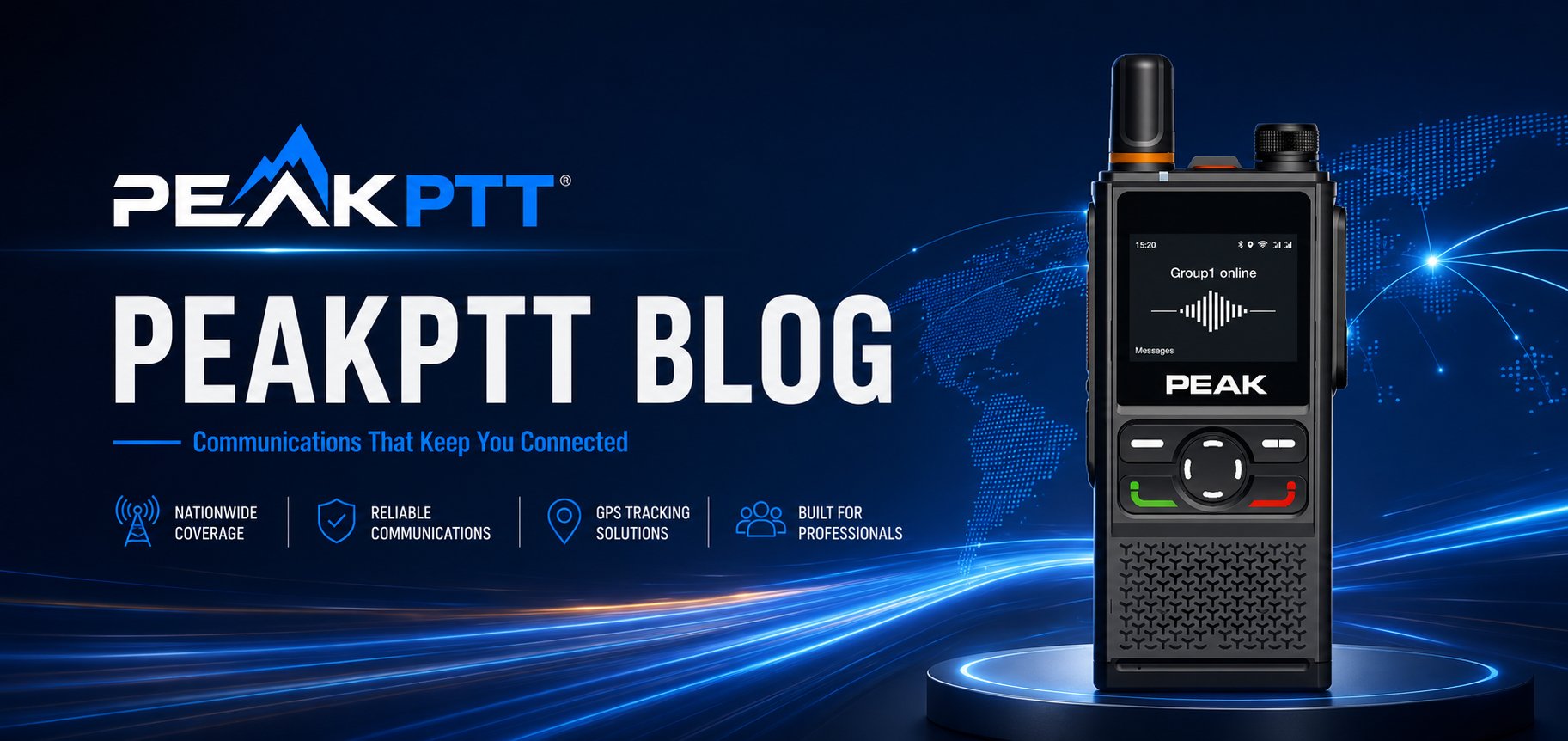

Two-way radios have been a major way to communicate for over 100 years. As times have changed, so have two-way radios, but their usefulness hasn’t disappeared.
Two-way radios remain a reliable, long-distance, and durable communication method for both personal and commercial use. They span industries from public works, construction, and retail. Two-way radios can be both simple or sophisticated and there are a variety of accessories available.
While you may be familiar with two-way radios, do you know what components make a two-way radio?
1) LCD Display
Liquid crystal display (LCD), also called LCD display, is the part of the radio users are most often looking at and noticing. The LCD is a small screen on the front of the radio that shows you battery life, channel number, text messages, radio status, and signal strength.
2) Antenna
Most two-way radios also come with an antenna. They can range from 3-inch to 6-inch, but some radios, like the PTT-584G, do not have a visible antenna.
Antennae help to receive radio signals and convert them into electrical signals.
3) Channel Knob
The channel knob, or channel selector knob, allows you to change channels. Channels are important when an organization is divided into groups and different organizations need to change channels to reach out to different teams or send company-wide messages.
4) Power/Volume Control
The power button turns the radio on and off. Turn the radio on with the power button to use the radio and turn it off when not in use to save battery.
On many radios, the power button will be a knob that also controls the volume of the radio. Turn it one way and it will switch the radio on and increase the volume, turn it the other to turn off the radio or reduce the volume.
5) Push-to-Talk Button
The push-to-talk button allows users to send messages. This button must be held down for the duration of a message and released for the user to receive messages. This button can also be used during calls to speak.
6) Belt Clip
Many two-way radios come equipped with belt clips that allow you to clip your radio onto your belt, pants, or other articles of clothing.
7) Panic Button
Panic buttons is a button on some radios that when pressed sends an emergency alert with the location of the user. This button is only used during emergency situations.
8) Battery
Every radio has a battery that can last between 6 hours to 24 hours depending on the strength of the battery and how often the radio is being used.
9) Microphone and Speaker
To send and receive messages, radios require a microphone and speaker. Users speak into the microphone to send messages and listen via the speaker.
10) Accessory Jack
An accessory jack allows users to plug in other accessories like headsets to use with the radio.
If have questions about PEAK PTT two way radios, call us — we would love to hear from you! 855-600-6161.