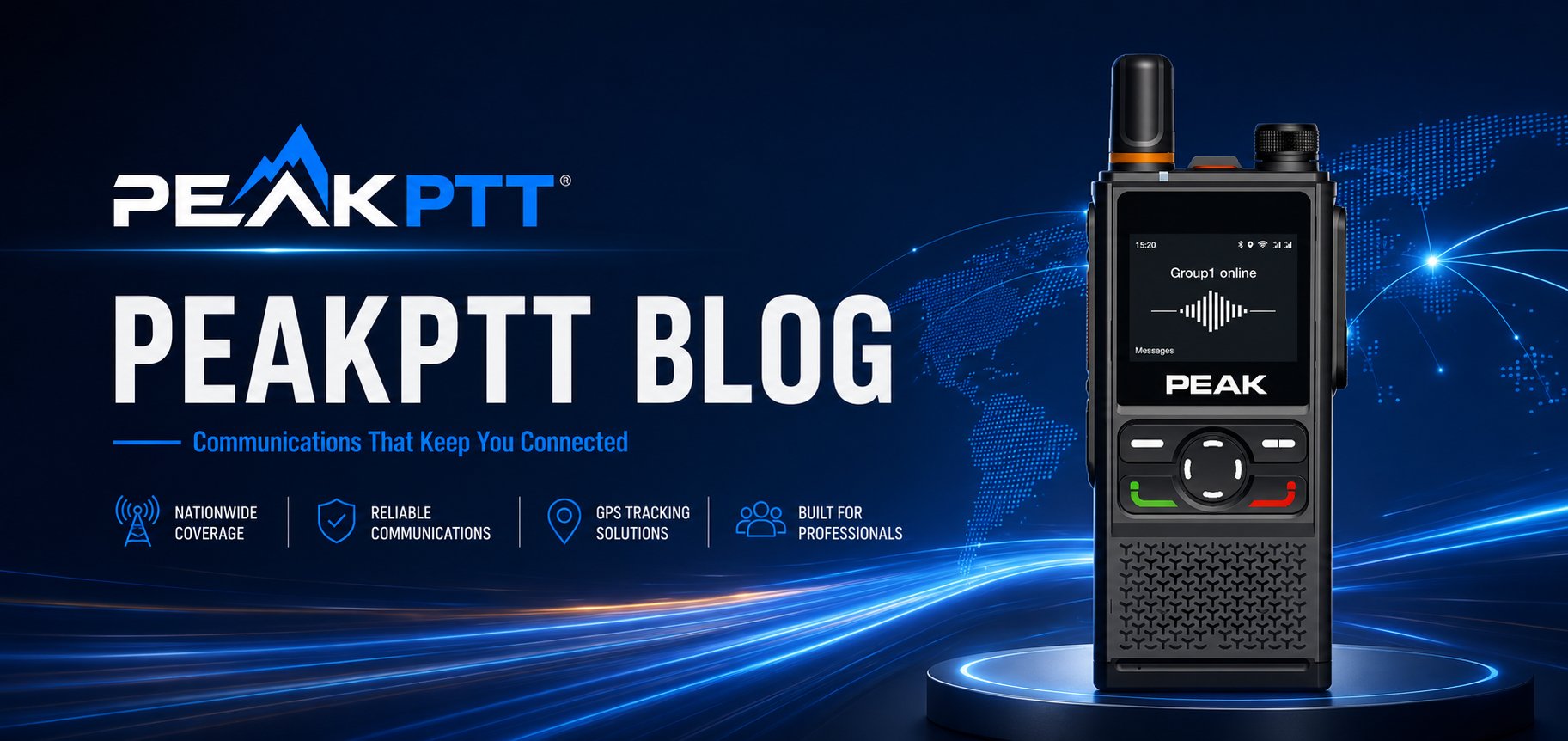
Push-to-Talk Over Cellular vs. Traditional Two-Way Radios

Explore Push-to-Talk Over Cellular (PoC) vs. traditional two-way radios. Discover why businesses are switching to PoC for nationwide, affordable, and instant

Push-to-Talk Over Cellular (PoC) represents a significant evolution in business communication, offering a modern, scalable alternative to traditional two-way radio systems for operations requiring instant, reliable, and widespread connectivity across diverse teams and locations.

Key Takeaways

  • Traditional two-way radios suffer from limited range, high infrastructure costs, and complex FCC licensing requirements.
  • Push-to-Talk Over Cellular (PoC) leverages existing 4G LTE and Wi-Fi networks for nationwide, instant communication.
  • PoC systems offer superior scalability, advanced features like GPS tracking, and a significantly lower total cost of ownership.
  • Businesses are switching to PoC for enhanced efficiency, improved safety, and real-time coordination across distributed workforces.
  • Choosing the right PoC provider involves considering hardware ruggedness, network coverage, customer support, and flexible purchasing models.
  • PeakPTT provides a low-friction, high-value PoC solution with rugged devices, affordable service, and robust customer assurance.

Understanding Traditional Two-Way Radios: Limitations and Legacy

Traditional two-way radios, often referred to as walkie-talkies, have long been a staple for instant communication in various industries. These systems operate by transmitting radio waves over specific frequencies, allowing for direct, one-to-one or one-to-many communication within a limited geographical area. Their simplicity and directness have made them invaluable for on-site coordination.

However, the reliance on dedicated radio frequencies introduces several inherent limitations. The range of traditional two-way radios is typically restricted to a few miles, often less in urban environments or areas with significant obstructions. Extending this range requires costly infrastructure like repeater towers, which must be purchased, installed, and maintained, adding significant capital and operational expenses.

How Traditional Radios Operate

Traditional two-way radio systems function on a line-of-sight principle, where signals travel directly between radios or via a repeater. This method, while effective for localized communication, means that coverage can be inconsistent and easily disrupted by terrain, buildings, or even atmospheric conditions. Their operation typically requires a clear path for radio waves to travel, which is a major constraint for mobile or geographically dispersed teams.

Furthermore, managing these frequencies often involves navigating complex regulatory requirements. Businesses using traditional two-way radios must frequently obtain licenses from the Federal Communications Commission (FCC) in the United States. This process adds bureaucracy, costs, and can involve specific technical knowledge for compliance, making deployment less straightforward.

Inherited Challenges of Legacy Systems

The challenges of traditional two-way radio systems extend beyond range and regulation. Scalability is a major concern; adding more users or expanding coverage to new sites often means investing in additional repeaters, channels, and licenses. This can quickly become cost-prohibitive and operationally complex. Maintenance of proprietary infrastructure also demands specialized expertise and ongoing financial commitment.

Moreover, traditional radios generally lack modern features crucial for today’s dynamic business environments. GPS tracking, data transmission capabilities, and integration with other business applications are rarely standard, limiting their utility for real-time workforce visibility and operational efficiency. For businesses needing to communicate across jobsites, warehouses, or field operations that span significant distances, these limitations pose critical barriers to effective coordination.

What is Push-to-Talk Over Cellular (PoC)? The Modern Standard

Push-to-Talk Over Cellular (PoC) is a technology that utilizes existing 4G LTE and Wi-Fi networks to provide instant, two-way communication capabilities similar to traditional radios, but with nationwide reach. This innovative approach liberates businesses from the geographical constraints and infrastructure burdens of legacy systems, offering a more flexible and powerful communication solution.

Instead of relying on dedicated radio frequencies, PoC radios transmit voice data over cellular or Wi-Fi networks. This means that wherever your team has cellular service or Wi-Fi access, they can communicate instantly. This fundamental difference unlocks unprecedented range and reliability for business operations, making it ideal for distributed teams and mobile workforces.

How PoC Technology Works

PoC technology functions by converting voice into data packets, which are then transmitted over standard cellular data networks (like 4G LTE) or Wi-Fi. This process allows for virtually instantaneous voice communication across vast distances, enabling sub-second message delivery to individuals or groups. The underlying infrastructure is already in place, maintained by cellular carriers, eliminating the need for businesses to invest in or manage their own radio towers and repeaters.

LTE, which stands for Long-Term Evolution, refers to the high-speed wireless communication standard used by most modern smartphones and data devices. By leveraging these robust and widely available networks, PoC radios ensure consistent and reliable connectivity across over 95% of the US landmass. When cellular service isn’t available, PoC devices can seamlessly switch to Wi-Fi, ensuring continuous communication in areas like warehouses or large facilities.

Core Benefits for Business Operations

The benefits of PoC for business operations are transformative. First and foremost is the nationwide coverage, allowing teams to communicate effortlessly whether they are across town or across the country. This eliminates the range limitations that plague traditional radios, ensuring seamless coordination for logistics, field service, and multi-site operations.

Secondly, PoC systems are inherently scalable. Adding new users or expanding to new locations is as simple as acquiring additional devices and activating service, without the need for complex infrastructure upgrades. This plug-and-play deployment model is particularly attractive to growing businesses. Furthermore, PoC devices often integrate advanced features such as GPS tracking, emergency alerts, and dispatch capabilities, providing enhanced safety and real-time workforce visibility that traditional radios simply cannot match.

Direct Comparison: PoC vs. Traditional Two-Way Radios

When evaluating communication solutions, a direct comparison between PoC and traditional two-way radios reveals clear distinctions in functionality, cost, and operational flexibility. Understanding these differences is crucial for businesses looking to optimize their team’s connectivity.

Feature Traditional Two-Way Radios Push-to-Talk Over Cellular (PoC)
Coverage Limited local range (miles), requires repeaters for expansion Nationwide via 4G LTE, seamless Wi-Fi integration
Infrastructure Requires proprietary repeaters, antennas, licensing Leverages existing cellular/Wi-Fi networks; no business infrastructure needed
Cost High upfront infrastructure costs, ongoing maintenance, FCC fees One-time device purchase, affordable monthly service; lower TCO
Scalability Complex and costly to expand coverage or add users Highly scalable; easy to add/remove users and devices
Features Basic voice communication; limited advanced features Instant voice, GPS tracking, dispatch, emergency alerts, data options
Regulatory Often requires FCC licensing and compliance No FCC licensing required for the end-user
Deployment Can be complex, requiring technical setup and licensing Plug-and-play, out-of-the-box readiness

The cost disparity is often a decisive factor. While traditional radios may seem to have a lower per-device cost initially, the hidden expenses of infrastructure, licensing, and maintenance can quickly accumulate. PoC, with its affordable monthly service and no capital expenditure for network infrastructure, often results in up to 80% cost savings over the long term for businesses needing widespread coverage.

Furthermore, the sub-second message delivery of PoC systems ensures that communication is not just widespread, but also immediate. This speed, combined with the comprehensive feature set, positions PoC as the superior choice for modern businesses that prioritize efficiency, safety, and seamless coordination across their entire operational footprint.

Why Businesses Are Switching to PoC: Efficiency, Safety, and Connectivity

The shift from traditional two-way radios to Push-to-Talk Over Cellular is driven by a clear need for more efficient, safer, and better-connected operations. Businesses across various sectors are recognizing that modern challenges demand modern communication tools that can keep pace with their dynamic environments.

Enhanced Operational Efficiency

For operations managers, the ability to communicate instantly and reliably with any team member, regardless of their location, dramatically boosts efficiency. Logistics leaders can coordinate drivers across state lines, construction supervisors can connect with teams on different jobsites, and warehouse managers can direct staff throughout vast facilities. This eliminates delays caused by out-of-range radios or the need for multiple communication devices.

The integration of GPS tracking within PoC systems provides real-time workforce visibility. This means field service coordinators can quickly locate the nearest technician for an urgent call, or security teams can monitor patrol routes with precision. This level of oversight not only improves response times but also optimizes resource allocation, leading to significant productivity gains and more streamlined workflows.

Improved Safety and Response Capabilities

Safety is paramount for frontline workers, and PoC radios significantly enhance this aspect. Instant, nationwide communication means that in an emergency, help can be summoned immediately, regardless of where a team member is located. Features like emergency buttons and man-down alerts can automatically transmit a user’s location and initiate communication, providing a critical layer of protection for lone workers or those in hazardous environments.

For industries like construction, where hazards are common, or security, where rapid response is essential, the reliable and widespread connectivity of PoC systems can be life-saving. The ability to create talk groups on the fly also ensures that critical information can be disseminated to relevant personnel instantly, allowing for coordinated responses to incidents or changes in operational plans.

Seamless Coordination for Distributed Teams

Today’s businesses increasingly rely on distributed teams, whether they are spread across multiple sites, operating from vehicles, or working remotely. Traditional radios struggle to bridge these geographical gaps without extensive and expensive infrastructure. PoC, by leveraging cellular networks, naturally supports seamless coordination across these dispersed workforces.

This means a supervisor at headquarters can communicate with a maintenance crew hundreds of miles away with the same ease as talking to someone in the next room. This unified communication platform fosters better teamwork, reduces miscommunication, and ensures that everyone is always on the same page, leading to more cohesive and productive operations. The result is a more agile and responsive organization capable of adapting to rapidly changing demands.

Choosing the Right PoC Solution: What to Prioritize

Selecting the ideal Push-to-Talk Over Cellular solution requires careful consideration of several key factors to ensure it aligns with your business’s specific operational needs and long-term goals. Not all PoC providers are created equal, and a thorough evaluation can save time, money, and operational headaches down the line.

Hardware Durability and Performance

For frontline operations, the ruggedness of the PoC devices is non-negotiable. Radios must be built to withstand the harsh conditions of jobsites, warehouses, and field operations, including drops, dust, water exposure, and extreme temperatures. Look for devices with industrial-grade construction, long-lasting batteries, and clear audio quality even in noisy environments. The hardware must be as tough as the teams that use it, ensuring reliable performance day in and day out.

Beyond physical durability, consider the device’s performance. This includes the speed of connection, the clarity of voice transmission, and the reliability of advanced features like GPS. A high-performing device ensures that communication is always instant and intelligible, which is critical for safety and efficiency.

Network Coverage and Reliability

The core advantage of PoC is its nationwide reach, so assess the provider’s network coverage. Ensure that the cellular networks used (e.g., 4G LTE) provide robust coverage in all your operational areas, including remote sites and indoor facilities. The ability to seamlessly switch to Wi-Fi for indoor use is also a significant benefit, ensuring continuous connectivity where cellular signals may be weak or unavailable.

Reliability of service is paramount. In business-critical situations, communication cannot fail. Investigate the uptime guarantees and network redundancy offered by the provider. A dependable network ensures that your teams are always connected, minimizing downtime and maximizing productivity.

Customer Support and Service Model

Even with the most reliable technology, questions or issues can arise. Strong customer support is essential. Look for providers that offer responsive, knowledgeable support, ideally 24/7, to address any concerns quickly. This includes technical assistance, troubleshooting, and guidance on optimizing your communication system.

Consider the overall service model. Does the provider offer a low-friction buying model with flexible terms? Look for transparent pricing, affordable monthly service, and no long-term commitments that can lock you into a solution that no longer fits your needs. A risk-free guarantee and a comprehensive warranty on hardware further demonstrate a provider’s confidence in their product and commitment to customer satisfaction.

PeakPTT: Your Partner for Modern, Reliable Business Communication

PeakPTT stands out as a leading provider of Push-to-Talk Over Cellular solutions, purpose-built for the demands of modern commercial teams. We understand the critical need for instant, reliable, and scalable communication that traditional two-way radios simply cannot deliver. Our offering is designed to address the pain points of operations-driven organizations, providing a robust, cost-effective, and easy-to-manage system.

Our core offering combines rugged hardware, specifically engineered for the toughest jobsites and field operations, with affordable monthly service that provides nationwide 4G LTE and Wi-Fi communication coverage. This eliminates the need for expensive repeater towers, complex FCC licensing, and the high infrastructure costs associated with legacy systems. We empower businesses to modernize their walkie-talkie systems without operational risk or capital complexity.

PeakPTT differentiates itself through a direct-to-customer ecommerce model supported by consultative sales and ongoing support. Our low-friction buying model includes a one-time device purchase, affordable recurring service with no long-term commitment, and same-business-day shipping for immediate deployment. We back our products with a 45-day risk-free guarantee and a lifetime hardware warranty tied to active service, ensuring peace of mind for our customers.

With PeakPTT, businesses gain access to instant team communication, sub-second message delivery, and GPS-enabled team connectivity for real-time workforce visibility. Our solutions are scalable for teams ranging from small crews to large fleets, ensuring that your communication system grows with your business. For more insights into how modern communication can transform your operations, visit our blog.

Frequently Asked Questions

Is Push-to-Talk Over Cellular (PoC) really nationwide?

Yes, PoC systems leverage the robust 4G LTE cellular networks provided by major carriers, which cover over 95% of the United States landmass. This provides true nationwide communication capabilities, allowing your teams to connect instantly whether they are across town or across the country. Additionally, PoC devices seamlessly switch to Wi-Fi for communication in areas without cellular coverage, such as within large buildings or specific indoor facilities, ensuring continuous connectivity.

Do I need an FCC license for PoC radios?

No, one of the significant advantages of Push-to-Talk Over Cellular is that it operates over existing commercial cellular and Wi-Fi networks. This means that, unlike traditional two-way radios that require specific frequency allocation and licensing, businesses using PoC do not need to obtain or manage an FCC license. This simplifies deployment, reduces regulatory burden, and eliminates associated fees, making it a more straightforward and cost-effective solution.

Are PoC radios rugged enough for my team’s operations?

Absolutely. Modern PoC radios are specifically designed to meet the rigorous demands of commercial and industrial environments. Devices from providers like PeakPTT feature ruggedized construction, often meeting military-grade durability standards for shock, vibration, dust, and water resistance. They are built to withstand drops, operate in extreme temperatures, and provide clear audio in noisy conditions, making them ideal for jobsites, warehouses, field operations, and other challenging work settings.

Future-Proof Your Team’s Communication with PoC

The evolution from traditional two-way radios to Push-to-Talk Over Cellular is not just a technological upgrade; it’s a strategic move for businesses seeking to enhance efficiency, improve safety, and ensure seamless coordination across their operations. PoC offers a scalable, cost-effective, and feature-rich communication solution that meets the demands of today’s dynamic work environments, providing nationwide coverage without the burden of complex infrastructure or regulatory hurdles. Embrace the future of instant business communication and empower your team with the tools they need to succeed. To explore how PoC can transform your operations, Contact PeakPTT today.