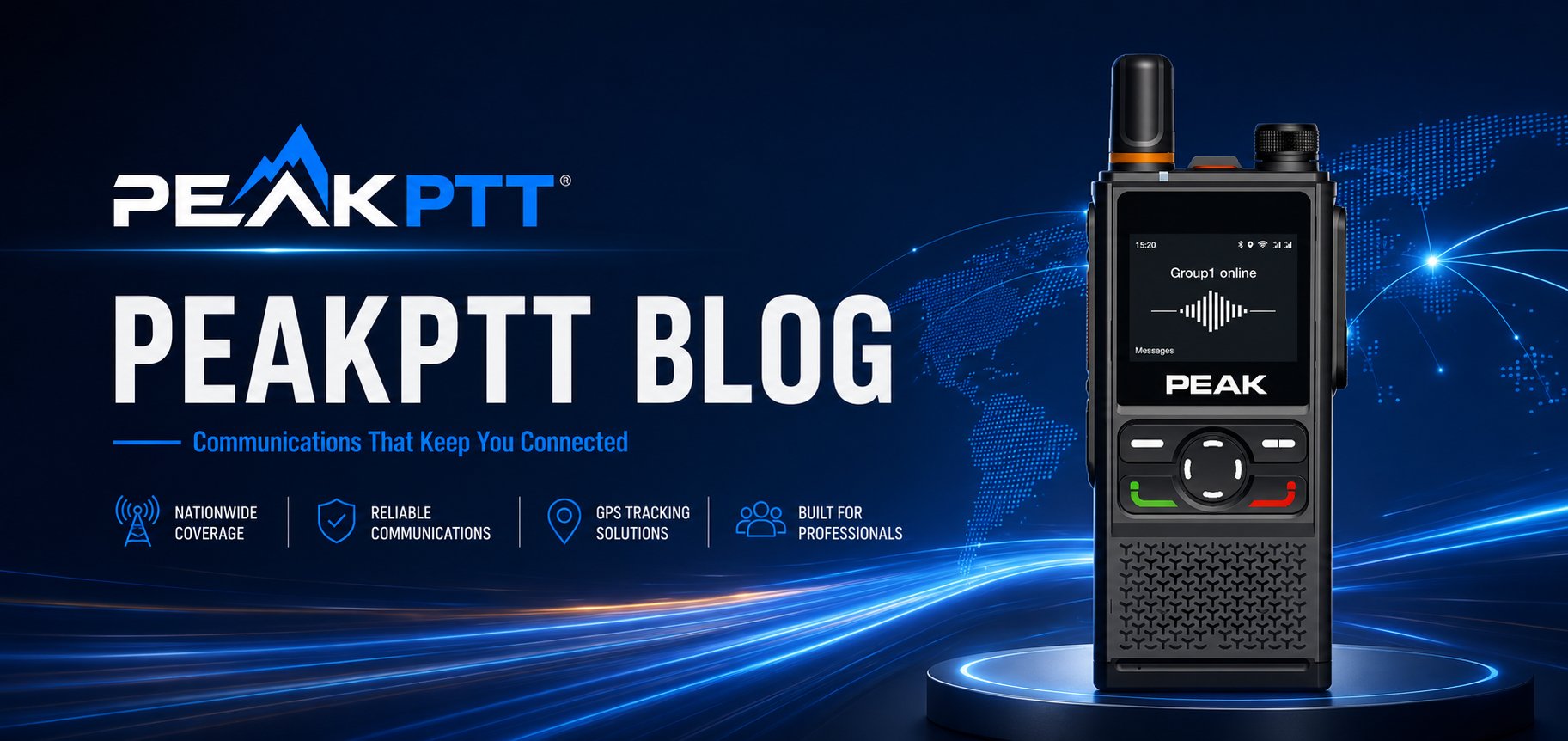
GPS Tracking for Field Teams: Enhance Operations with PoC Radios

Optimize operations with advanced GPS tracking for field teams. Discover how PeakPTT’s PoC radios provide real-time visibility, safety, and efficiency for your

GPS tracking for field teams is no longer a luxury but a critical component for modern business operations, offering unparalleled insights into workforce location and activity. Integrating robust GPS capabilities into your communication system transforms how mobile teams operate, enhancing efficiency, safety, and accountability across diverse industries.

Key Takeaways

  • GPS tracking in PoC radios provides real-time location data for mobile workforces, essential for operational oversight.
  • Push-to-Talk over Cellular (PoC) technology merges instant communication with nationwide 4G LTE/Wi-Fi coverage and integrated GPS.
  • Benefits include improved dispatch, optimized routes, enhanced worker safety, and greater accountability through location transparency.
  • Effective GPS solutions integrate seamlessly with dispatch platforms, enabling dynamic team coordination and rapid emergency response.
  • When choosing a system, prioritize accuracy, battery life, intuitive mapping, and scalability to meet your business’s evolving needs.
  • PeakPTT offers rugged PoC radios with advanced GPS, delivering reliable, nationwide communication without complex infrastructure.

The Importance of GPS Tracking for Mobile Workforces

For any business managing a mobile workforce—be it in construction, logistics, field service, or security—understanding the real-time location of personnel and assets is paramount. Traditional communication methods often fall short, leaving managers with blind spots that can hinder productivity, compromise safety, and complicate response efforts. Modern operations demand tools that provide immediate, actionable intelligence.

GPS tracking for field teams addresses these challenges directly. It provides a constant, accurate stream of location data, allowing managers to visualize their entire workforce on a map. This visibility is not just about knowing where someone is; it’s about optimizing resource allocation, ensuring timely service delivery, and proactively managing potential risks. Without this crucial data, businesses risk inefficiencies, delayed responses, and a lack of accountability.

Enhancing Operational Oversight

Operational oversight is significantly bolstered by precise GPS tracking. Managers can monitor team movements, verify job site arrivals and departures, and ensure that tasks are being completed in the correct sequence and location. This level of detail helps identify bottlenecks, streamline workflows, and ensure compliance with operational protocols. For instance, a logistics company can track its fleet of delivery vehicles, ensuring optimal routing and adherence to schedules, which can lead to a 15% reduction in fuel costs and delivery times.

Furthermore, real-time location data supports dynamic decision-making. If an urgent task arises, a dispatcher can quickly identify the nearest available team member, reducing response times and improving customer satisfaction. This proactive management capability transforms potential delays into opportunities for efficiency gains, directly impacting the bottom line.

Ensuring Worker Safety and Compliance

Beyond efficiency, worker safety is a primary concern for any organization with field teams. GPS tracking provides a critical safety net, especially for lone workers or those operating in hazardous environments. In an emergency, knowing the exact location of a team member allows for rapid deployment of assistance, significantly improving outcomes. Many PeakPTT radios, for example, include dedicated SOS buttons that, when pressed, transmit location data instantly to dispatchers or predefined contacts.

Compliance with safety regulations and company policies is also easier to enforce and verify with GPS tracking. Businesses can generate reports confirming that teams remained within designated work zones or followed specific routes. This data serves as an invaluable record for auditing purposes and can help mitigate liability by demonstrating due diligence in worker safety protocols.

How PoC Radios Enable Real-time Location Monitoring

Push-to-Talk over Cellular (PoC) radios have revolutionized business communication by combining the instant, group communication capabilities of traditional two-way radios with the expansive coverage of cellular networks. PoC is a communication technology that utilizes 4G LTE and Wi-Fi networks to provide push-to-talk functionality over a wide area, eliminating the need for expensive, localized radio infrastructure. This inherent reliance on cellular networks naturally integrates with advanced GPS capabilities.

Unlike older radio systems that might require separate GPS devices or have limited range, PoC radios are essentially ruggedized smartphones optimized for instant voice communication. Each device contains a built-in GPS module that continuously communicates with satellites to determine its precise location. This location data is then transmitted over the cellular network to a central dispatch platform or management software.

The integration of GPS directly into the PoC device means that location tracking is seamless and always active as long as the device is powered on and connected to a network. This eliminates the need for employees to carry multiple devices or to manually report their positions, streamlining operations and ensuring consistent data flow. The advanced processing power within modern PoC devices also allows for more sophisticated location services, including historical tracking, geofencing, and location-based group calls.

The Role of GPS in Modern Communication

GPS, or Global Positioning System, refers to a satellite-based navigation system that provides location, velocity, and time synchronization. In the context of PoC radios, GPS transforms a simple communication device into a powerful asset management and safety tool. The data gathered by these integrated GPS modules is not just raw coordinates; it’s interpreted by sophisticated software to provide meaningful insights.

This means dispatchers can view live maps showing the positions of all active field teams, track their routes, and even review historical movements. The reliability of cellular networks ensures that this data is transmitted swiftly and consistently, offering true real-time visibility. This capability is a significant upgrade from traditional systems where location information was often manually reported or limited by line-of-sight radio signals.

Benefits of GPS Tracking: Efficiency, Safety, and Accountability

Implementing GPS tracking for field teams through PoC radios delivers a multifaceted return on investment, touching upon every aspect of mobile operations. The advantages extend far beyond simple location awareness, translating into tangible improvements in productivity, security, and operational integrity.

Optimizing Dispatch and Route Planning

One of the most immediate benefits of GPS tracking is its impact on dispatching and route optimization. With real-time visibility into team locations, dispatchers can assign tasks to the closest and most appropriate personnel, significantly reducing travel times and fuel consumption. This can lead to an average efficiency increase of up to 25% for companies managing large fleets or widespread service areas. Dynamic routing based on live traffic updates and job priorities ensures that resources are always deployed optimally.

Furthermore, historical route data allows managers to analyze and refine standard operating procedures, identifying inefficient paths or common delays. This data-driven approach to logistics can help businesses save thousands of dollars annually by minimizing idle time and maximizing productive hours.

Enhancing Worker Safety and Emergency Response

The safety implications of integrated GPS are profound. In an emergency, every second counts. With a PoC radio equipped with GPS, a worker in distress can instantly transmit their exact location to their team or dispatch center. This reduces the time it takes for help to arrive, which can be critical in situations ranging from accidents to medical emergencies. Many systems also allow for geofencing, which means setting virtual boundaries that trigger alerts if a worker enters or leaves a designated area, adding an extra layer of security.

For instance, if a security guard patrolling a large property doesn’t check in at a specific point, their last known GPS location can guide a rapid response. This proactive safety measure is invaluable for protecting valuable human assets.

Fostering Accountability and Productivity

GPS tracking naturally fosters greater accountability among field teams. When employees know their movements are being monitored, adherence to schedules and work protocols tends to improve. This isn’t about micromanagement; it’s about providing a clear framework for performance and ensuring that resources are being utilized effectively. For example, verifying arrival and departure times at job sites ensures accurate billing and employee timekeeping.

Moreover, the data collected can be used to generate performance reports, highlighting areas where training might be needed or where individual productivity can be improved. This objective data supports fair performance reviews and provides a basis for recognizing high-performing team members. PeakPTT’s solutions offer robust reporting features that empower businesses with this precise data, further detailing how communication tools can elevate operational standards on our blog.

Integrating GPS with Dispatch and Team Coordination

The true power of GPS tracking for field teams is unlocked when it’s seamlessly integrated with a comprehensive dispatch and communication platform. This integration transforms raw location data into actionable intelligence, enabling unparalleled team coordination and rapid response capabilities. Modern PoC systems are designed to bridge this gap, offering a unified ecosystem for voice communication and location management.

Dispatchers gain access to a centralized dashboard that displays all active PoC radios on a dynamic map. This visual representation allows them to see the real-time positions of individual team members or entire fleets. They can instantly initiate group calls with team members in a specific area, or directly contact the closest available unit for an urgent task. This level of coordination is vital for operations where rapid deployment and precise resource allocation are critical.

Dynamic Grouping and Geofencing

One powerful feature enabled by this integration is dynamic grouping. Based on their current GPS location, team members can be automatically assigned to temporary talk groups. For example, all security personnel within a specific sector of an event venue can instantly communicate with each other, enhancing situational awareness and response. This flexibility ensures that communication is always relevant and targeted.

Geofencing means creating virtual geographic boundaries using GPS technology. When a PoC radio enters or exits a predefined geofence, the system can automatically trigger alerts, send notifications to dispatch, or even change the radio’s talk group. This feature is invaluable for managing access to restricted areas, monitoring property perimeters, or ensuring that delivery drivers stay within their designated routes. It provides an automated layer of oversight that reduces manual intervention and increases security.

Enhanced Emergency Response Protocols

In emergency situations, the integration of GPS with dispatch is a game-changer. When a worker activates an SOS button on their PoC radio, the system immediately transmits their precise location to the dispatch center. This critical information allows dispatchers to pinpoint the individual’s position on a map and coordinate the fastest possible response from emergency services or nearby team members. The ability to see the exact location can shave minutes off response times, which can be life-saving.

Furthermore, historical GPS data can be invaluable for post-incident analysis. By reviewing the movements of personnel leading up to an event, businesses can gain insights into contributing factors and refine their safety protocols. This continuous feedback loop ensures that emergency response strategies are always improving.

Choosing a Communication System with Robust GPS Features

Selecting the right communication system with integrated GPS tracking for field teams is a strategic decision that impacts operational efficiency, safety, and long-term costs. Businesses must look beyond basic location services and consider a comprehensive solution that aligns with their specific needs and operational environment. A robust system should offer more than just dots on a map; it should provide actionable intelligence and seamless integration.

Key Considerations for Selection

When evaluating PoC communication systems, several factors related to GPS functionality stand out:

  • Accuracy and Reliability: The GPS data must be consistently accurate, even in challenging environments like urban canyons or dense foliage. Look for systems that leverage multiple satellite constellations for improved precision.
  • Battery Life Optimization: Continuous GPS tracking can drain battery life. Choose devices optimized for power efficiency, ensuring that radios can last an entire shift, typically 12-18 hours, without needing a recharge.
  • Intuitive Mapping and User Interface: The dispatch software should offer a clear, easy-to-understand map interface with customizable overlays, historical tracking, and robust reporting features. Complex interfaces can hinder quick decision-making.
  • Scalability: The system must be capable of growing with your business, supporting an increasing number of users and devices without compromising performance. PeakPTT solutions, for example, are designed to scale effortlessly from small crews to large enterprises managing thousands of radios.
  • Integration Capabilities: Consider how well the GPS data integrates with other business applications, such as fleet management software, CRM systems, or enterprise resource planning (ERP) tools.
  • Security and Privacy: Ensure that location data is encrypted and handled securely, with robust privacy controls in place to protect sensitive information.

Businesses should also consider the ease of deployment and ongoing support. A system that is plug-and-play, with minimal setup required, allows teams to get up and running quickly. PeakPTT’s model emphasizes this, providing devices that work out-of-the-box with pre-programmed settings and offering dedicated customer support to ensure smooth operation.

PeakPTT: Your Partner for Connected Field Operations

PeakPTT stands as a leading provider of Push-to-Talk over Cellular (PoC) communication solutions, specifically engineered to meet the rigorous demands of modern field operations. Our offering integrates advanced GPS tracking for field teams into rugged, dependable hardware, ensuring businesses have the tools they need for instant, nationwide communication and unparalleled workforce visibility. Since our founding in 2018, we have supported over 5,000 businesses across the United States.

We understand that frontline operations require communication tools that are not only effective but also durable and cost-efficient. PeakPTT radios are built to withstand the toughest jobsite conditions, providing reliable performance where standard consumer devices would fail. Coupled with our affordable monthly service plans, starting as low as $25 per user, businesses can deploy a sophisticated communication and tracking system without the prohibitive costs associated with traditional two-way radio infrastructure, repeater towers, or FCC licensing complexities.

Our solutions offer instant team communication over 4G LTE and Wi-Fi networks, ensuring sub-second message delivery across jobsites, warehouses, and nationwide field operations. The integrated GPS tracking delivers real-time location data, empowering managers with critical insights for dispatch, safety, and accountability. This means improved response times, optimized routes, and enhanced safety protocols for your entire mobile workforce.

PeakPTT differentiates itself through a commitment to customer success. We offer a low-friction buying model that includes a one-time device purchase, no long-term commitments, same-business-day shipping, and a 45-day risk-free guarantee. Furthermore, our lifetime hardware warranty, tied to active service, underscores our confidence in the durability and reliability of our products. This direct-to-customer approach, supported by consultative sales and ongoing live human support, makes PeakPTT the trusted partner for operations-driven organizations seeking immediate, scalable, and reliable voice communication solutions.

Frequently Asked Questions

How accurate is GPS tracking on PoC radios?

GPS tracking on modern PoC radios is highly accurate, typically within 5-15 meters, similar to high-end smartphones. This precision is usually sufficient for most business applications, including dispatch, route optimization, and emergency response. Factors like satellite signal strength and environmental conditions can influence exact accuracy.

Can GPS tracking improve my team’s safety?

Absolutely. GPS tracking significantly enhances team safety by providing real-time location data, which is crucial during emergencies. Many PoC radios include SOS buttons that, when activated, transmit the user’s exact coordinates to dispatch, enabling rapid assistance. It also helps monitor lone workers or those in hazardous environments.

Is GPS tracking on PoC radios cost-effective?

Yes, GPS tracking integrated into PoC radios is highly cost-effective, especially when compared to traditional radio systems that require separate GPS units or extensive infrastructure. PoC leverages existing cellular networks, eliminating the need for expensive repeaters and licensing. This bundled solution offers advanced features at a predictable, affordable monthly cost per user.

What is the typical battery life for a PoC radio with GPS?

The typical battery life for a PoC radio with continuous GPS tracking varies by model and usage, but most are designed to last a full 12- to 18-hour shift on a single charge. Manufacturers optimize these devices for power efficiency to ensure reliable operation throughout the workday. Factors like screen brightness, talk time, and network signal strength can influence actual battery performance.

Ready to empower your field teams with nationwide communication and real-time GPS tracking? Explore PeakPTT’s range of rugged PoC radios and discover how our solutions can enhance your operational efficiency, safety, and accountability. Visit PeakPTT.com today to learn more and get started.