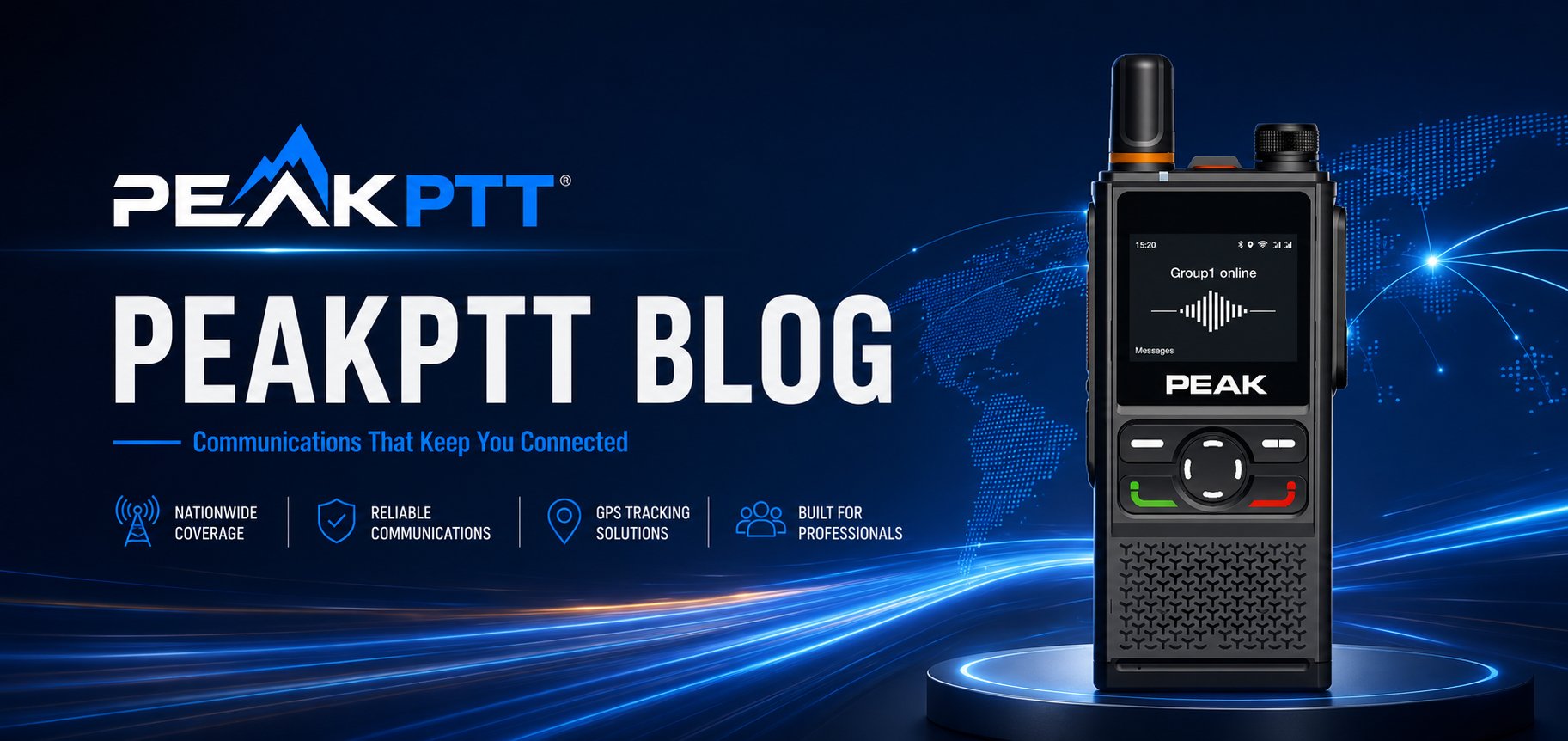

Achieving truly scalable business communication is paramount for organizations aiming to grow their teams and operations without being hampered by outdated infrastructure. PeakPTT offers advanced push-to-talk over cellular (PoC) radios that provide instant, nationwide communication, effortlessly adapting to your business’s evolving needs, from small crews to extensive distributed workforces.
Key Takeaways
- Push-to-Talk over Cellular (PoC) radios eliminate the need for costly, complex traditional two-way radio infrastructure.
- Scalability means easily adding or removing users and communication groups without system overhauls or technical expertise.
- Nationwide 4G LTE and Wi-Fi coverage ensures seamless, instant communication across all job sites, warehouses, and field operations.
- Predictable monthly service plans and a direct-to-customer model significantly reduce operational risk and capital expenditure.
- PeakPTT provides rugged hardware, instant plug-and-play deployment, real-time GPS tracking, and a lifetime hardware warranty for operational efficiency.
- Businesses can achieve significant cost savings and improved team coordination compared to traditional Land Mobile Radio (LMR) systems.
The Challenge of Scaling Traditional Communication Systems
For many businesses, growth is the ultimate goal. However, expanding a team often introduces unforeseen complexities, particularly when it comes to communication. Traditional two-way radio systems, commonly known as Land Mobile Radio (LMR), present significant hurdles to scalability. These systems rely on a fixed infrastructure of repeater towers and base stations, which dictate their coverage area and capacity.
When a business needs to expand its operations to a new job site, open another warehouse, or deploy a larger field team, the existing LMR system frequently falls short. This often necessitates costly and time-consuming infrastructure upgrades, involving new licenses, additional repeaters, and complex technical installations. Such expansions can easily run into thousands of dollars and delay operational readiness by weeks or even months, directly impacting productivity and profitability.
Limitations of LMR Two-Way Radios
Traditional LMR radios are inherently limited by their localized infrastructure. Their range is typically confined to a specific geographical area, often a few miles, unless an extensive network of repeaters is established. This poses a problem for distributed teams or businesses operating across multiple locations, such as construction companies with various job sites or logistics firms managing a regional fleet.
Furthermore, adding new users to an LMR system can be cumbersome. Each new radio often requires manual programming and integration into the existing frequency plan, a task that can be complicated and requires specialized knowledge. This lack of flexibility makes rapid team expansion or temporary staffing adjustments difficult and inefficient, hindering quick responses to market demands or project changes.
The Hidden Costs of Infrastructure Expansion
The upfront capital expenditure for LMR infrastructure, including repeaters, antennas, and licensing fees, is substantial. Beyond the initial investment, businesses face ongoing maintenance costs, energy consumption for repeaters, and the need for specialized technicians to manage the system. When scalability becomes a requirement, these costs multiply.
Expanding an LMR system means acquiring new equipment, securing additional FCC licenses, and potentially installing more physical infrastructure. This isn’t just a financial burden; it’s a logistical one. The process can divert valuable resources and management attention away from core business activities, creating a bottleneck rather than facilitating growth. Many businesses find themselves trapped in a cycle of expensive upgrades, never quite catching up with their communication needs.
How PoC Radios Offer Unmatched Scalability for Businesses
Push-to-Talk over Cellular (PoC) refers to a modern communication technology that leverages existing cellular (LTE) and Wi-Fi networks to provide instant, two-way radio-like communication. Unlike traditional LMR systems, PoC radios do not require businesses to build or maintain their own dedicated infrastructure. This fundamental difference is what makes PoC inherently scalable and a game-changer for dynamic organizations.
With PoC, your communication system expands as far as the cellular network reaches – which, in the U.S., covers over 95% of the landmass. This means your teams can communicate instantly whether they are across the street, across the state, or across the country. This nationwide reach is a critical advantage for businesses with mobile workforces, multiple sites, or those planning significant geographical expansion.
Leveraging Existing LTE/Wi-Fi Networks
The core of PoC’s scalability lies in its reliance on robust, pre-existing cellular and Wi-Fi networks. Instead of investing in repeaters and towers, businesses tap into the vast infrastructure already maintained by major carriers. This eliminates the need for capital-intensive infrastructure purchases and complex regulatory compliance, such as FCC licensing, which often plagues LMR systems.
This reliance on established networks means that as cellular coverage improves and expands, so too does your communication system’s reach, without any additional investment from your business. For operations managers, this translates to predictable performance and unparalleled flexibility. Whether your team is in a bustling urban environment or a remote rural job site, if there’s cellular service, they’re connected.
Instant Deployment, Zero Infrastructure
One of the most compelling aspects of PoC for businesses seeking scalability is the ease of deployment. Since there’s no infrastructure to install, PeakPTT PoC radios are essentially plug-and-play. Devices arrive pre-configured and ready to use out of the box, often within the same business day of shipping.
This instant deployment capability means that a new team member or an entire new crew can be equipped and communicating within minutes, not days or weeks. This agility is invaluable for businesses that need to respond quickly to new projects, seasonal demands, or unexpected operational shifts. The absence of infrastructure also means no ongoing maintenance headaches or expensive technician call-outs, freeing up valuable internal resources.
Effortlessly Adding Users and Groups as Your Team Expands
Scalability, in the context of communication systems, means the ability of a system to handle a growing amount of work by adding resources. For PeakPTT, this translates into a seamless process for incorporating new users and managing communication groups, ensuring that your system grows as effortlessly as your business.
Whether you’re adding one new employee or onboarding an entire new department, the process is streamlined and efficient. There are no technical limitations on the number of users your system can support, making it ideal for businesses ranging from small crews of five to large enterprises with thousands of employees. This flexibility is a cornerstone of modern business operations, allowing for dynamic adjustments without operational friction.
Simple Device Provisioning
Adding a new user to a PeakPTT system is remarkably simple. Devices can be activated and assigned to specific users and talk groups through a user-friendly online portal. This eliminates the need for complex programming software or specialized IT staff. New radios arrive ready to connect, requiring minimal setup before they are fully operational.
This simplicity extends to managing device settings, user permissions, and even GPS tracking features remotely. Operations managers can quickly provision new devices, update configurations, and monitor their entire fleet from a centralized dashboard. This ease of management ensures that your communication system remains aligned with your operational structure, even as it evolves rapidly.
Dynamic Group Management
As teams grow, so does the need for organized communication. PeakPTT’s PoC systems allow for dynamic creation and management of talk groups. You can create groups for specific projects, departments, job sites, or even temporary assignments, ensuring that communication remains targeted and efficient. For instance, a construction supervisor can create a group for the